The Official Historical Archive
The Sound
The philosophy and emotional flow behind Skyline Jazz
The Spark
In the mid-1970s, Drew and Tom were deeply immersed in rock music — especially deep rock album tracks played through Drew’s high-end stereo system, where every note felt immediate and alive. Music was central to their lives.
Then one evening, while scanning the FM dial, they stumbled onto something completely unexpected.
The room suddenly filled with a rich, warm sound unlike anything they had heard before. The station was New York contemporary jazz giant WRVR-FM, playing The Heath Brothers – Live at the Public Theatre.
That moment changed everything.
Soon their listening blended rock and jazz and their newly found appreciation of jazz was growing. Tom still remembers hearing Oscar Peterson for the first time and nearly falling off his chair in amazement.
Programming by Instinct
Skyline Jazz was never built on formulas.
It was built on emotional flow.
Before every shift, the DJs stood before the record racks thinking not about genres, charts, or
categories — but about feeling. They remembered how certain tracks sounded emotionally and whether one tune naturally flowed into the atmosphere created by the next.
Even the album covers seemed to communicate emotion.
“The music was selected by instinct — by how it felt, how it flowed, and how one track emotionally connected to the next.”
Tracks were often played in uninterrupted three-song sets before any announcement. These carefully sequenced segues became one of the defining characteristics of the Skyline Jazz sound.
The goal was simple: An uninterrupted emotional journey.

Danny Gottlieb and Marc Egan of the band Elements sitting in front of a record rack during an interview at Skyline Jazz.
The Expanding Soundscape
What began as an effort to recreate the sound of WRVR gradually evolved into something broader and more distinctive.
Skyline Jazz embraced the full energy of New York’s exploding contemporary jazz scene. In early 1986, Robert joined the team and introduced Latin Jazz into the format. Its rhythm, passion, and emotional warmth became a perfect addition to the Skyline Jazz sound.
Music was always selected to create a positive emotional atmosphere.
Softer, reflective tracks filled the mornings. Warmer, more energetic selections carried listeners through the afternoon and evening hours.
The DJs constantly heard the same instruction:
“Keep it snappy!”
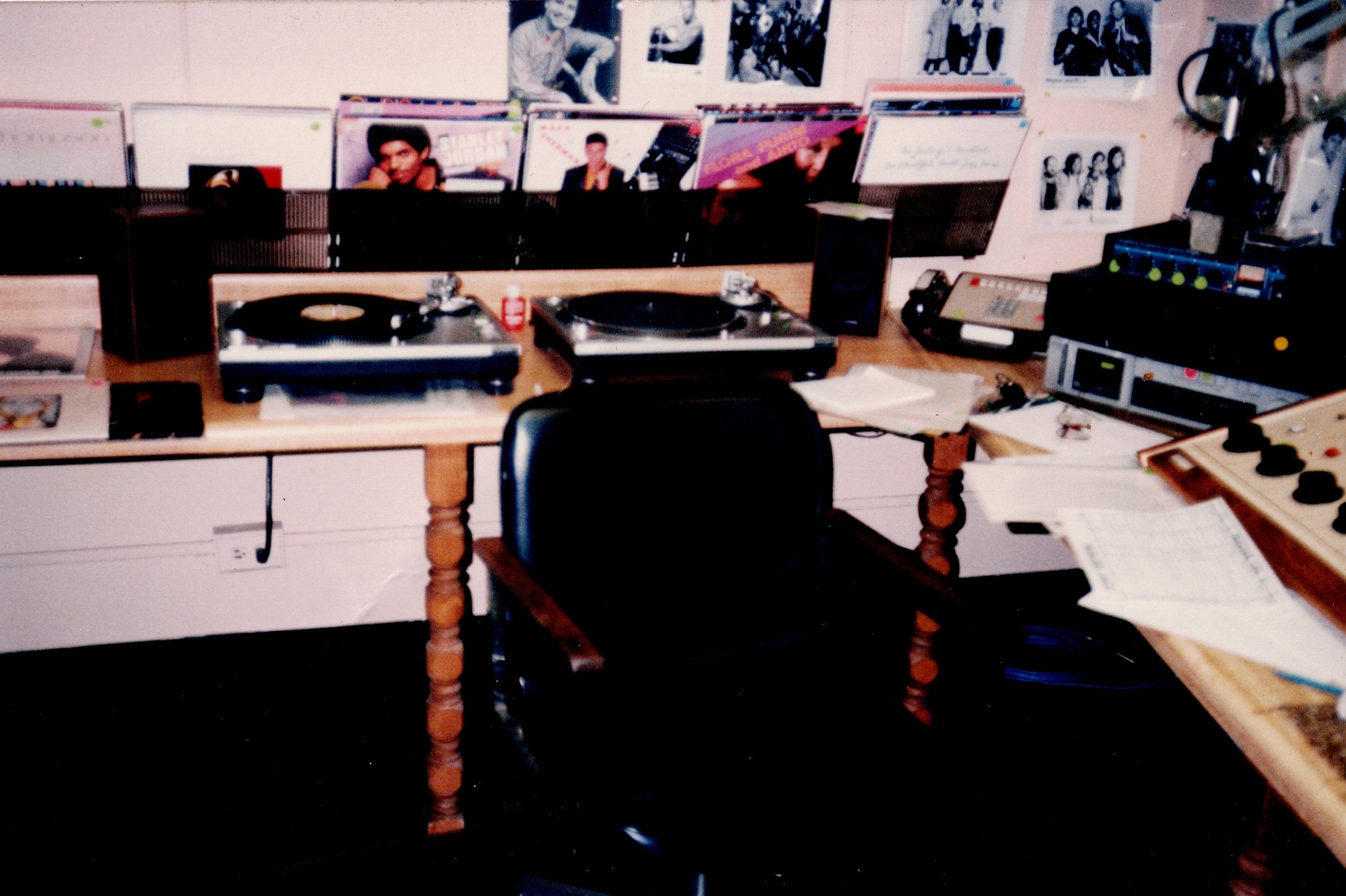
The Skyline Jazz studio in 1986
A Music Promotion Service
Skyline Jazz never saw itself as a traditional radio station. It saw itself as a passionate advocate for the music and the artists.
Where traditional stations sold advertising time, Skyline Jazz promoted something far more meaningful — the music itself.
The format was approximately 99% instrumental. Vocal tracks were rare and used only when the voice functioned like another instrument within the emotional atmosphere of the set.
DJs were trained to give full, respectful back announcements:
artist
track title
album title
record label
release year
and notable side musicians
Listeners were encouraged to experience live music through announcements of performances happening at Jazz Clubs and concert venues throughout New York City.
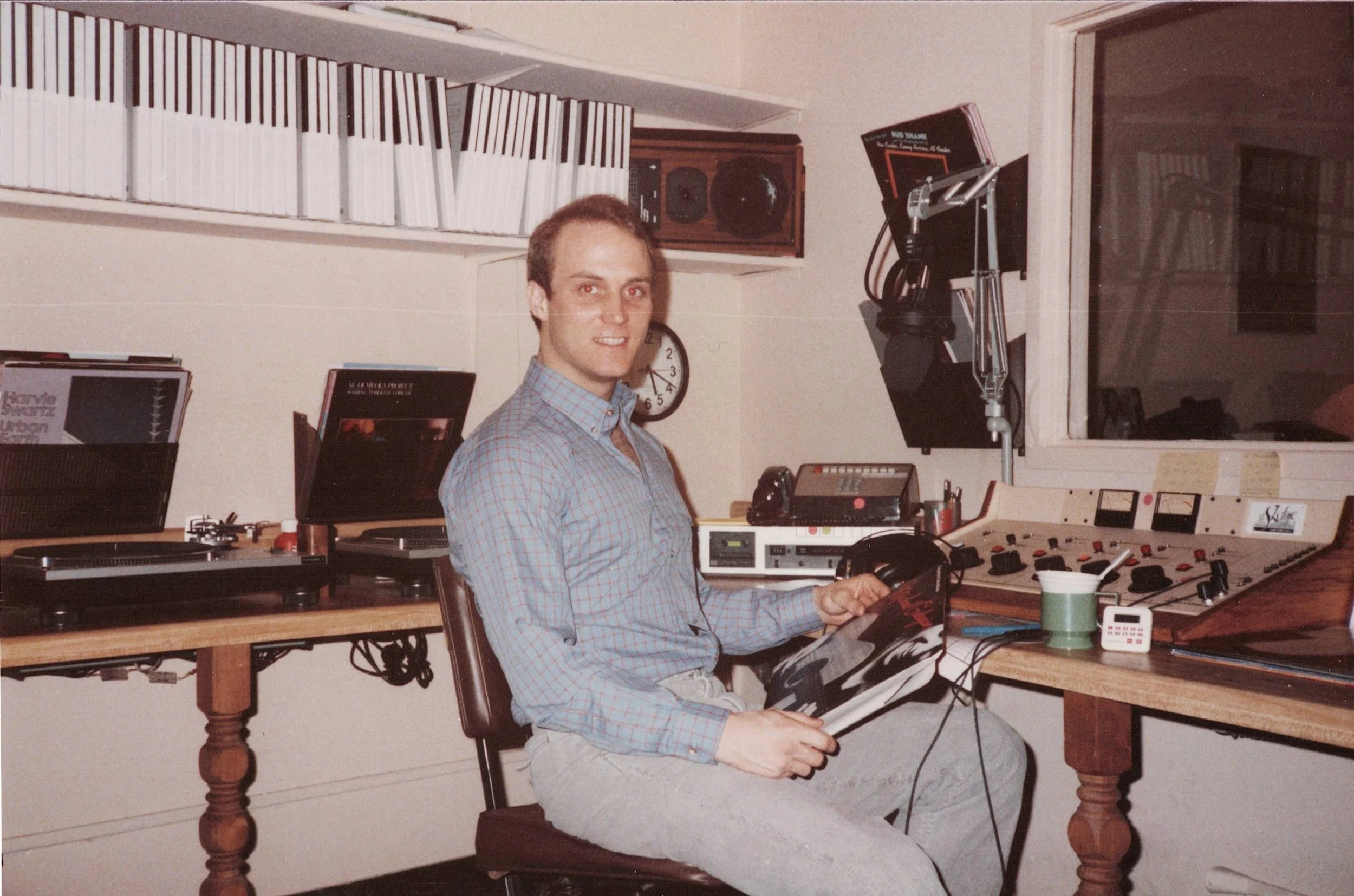
Volunteer DJ during his show at Skyline Jazz, 1986
The People Behind the Microphone
Skyline Jazz generated little to no revenue. As a result, everyone associated with the station—including founders Drew Butkocy, Tom Koyen, and Robert Sliva—served as volunteers, donating their time simply because they believed New York deserved a dedicated contemporary jazz radio service.
The on-air staff consisted entirely of volunteer DJs recruited through local colleges and advertisements in The Village Voice. While many applicants had traditional broadcast radio experience, Drew and Tom were looking for announcers whose style reflected Skyline Jazz’s philosophy.
Rather than polished radio personalities, Drew and Tom sought announcers who shared a genuine passion for contemporary jazz and could present the music in a natural, conversational style. They valued authenticity and musical knowledge over conventional radio delivery.
The Result: A distinctive on-air sound that reflected Skyline Jazz’s philosophy—knowledgeable, relaxed, and always centered on the music and the vibrant local jazz scene.
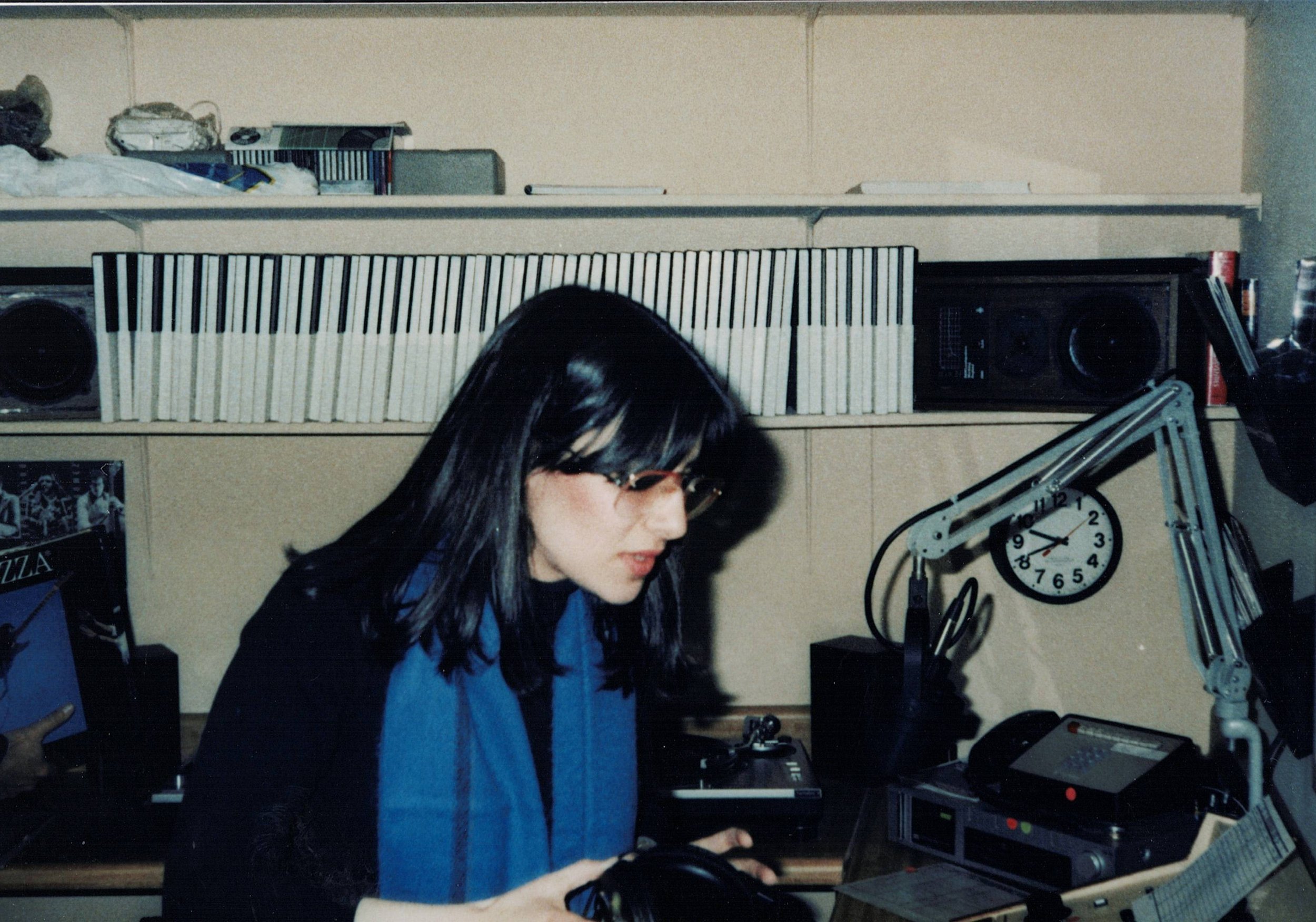
Volunteer DJ during her show at Skyline Jazz, 1986
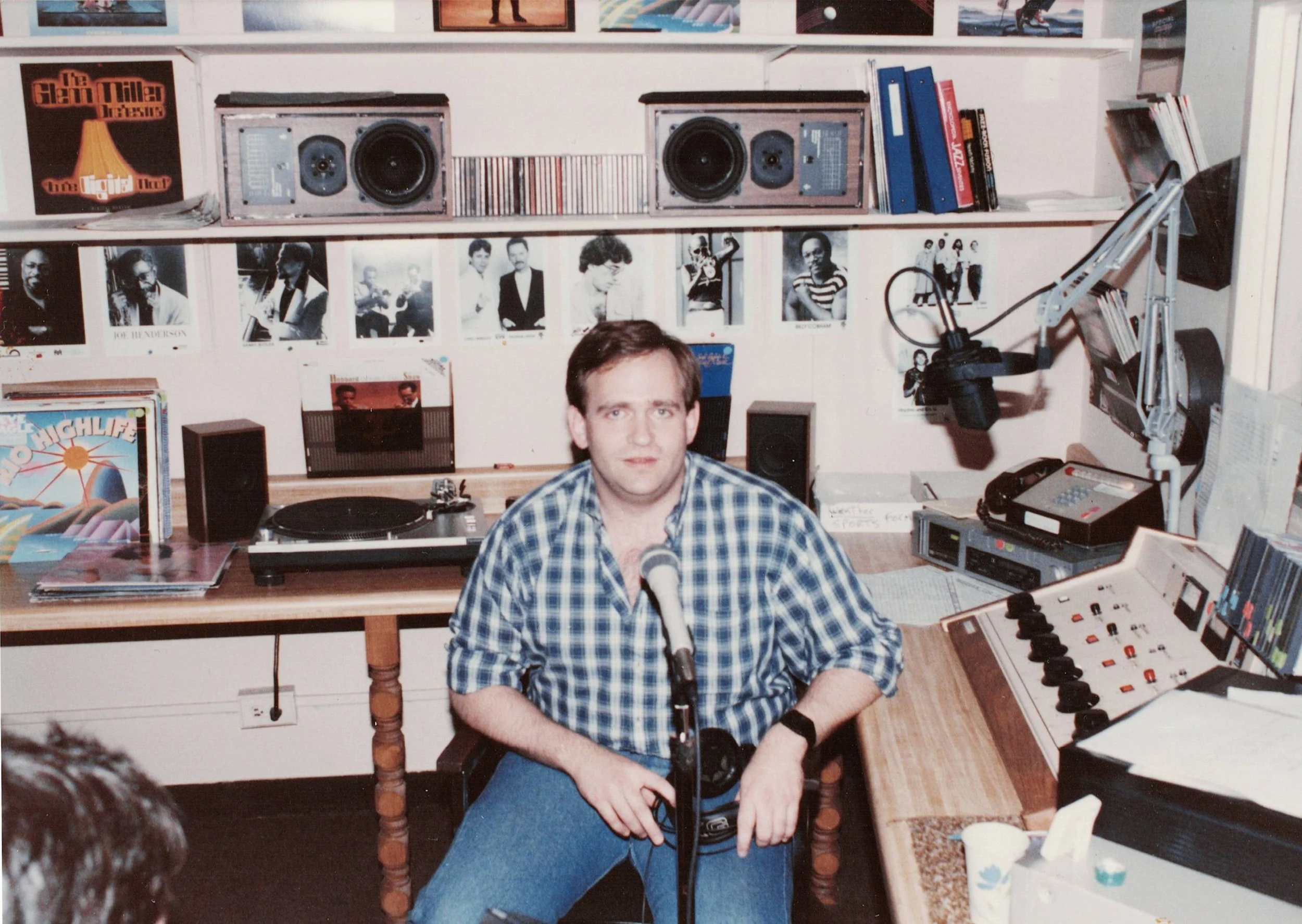
Tom in the studio in 1986 with the early collection of CDs on the shelf above between the speakers and the first CD player next to the console on the right under the papers.
The Early Leap to Digital
Skyline Jazz embraced compact discs early, recognizing the improved clarity and dynamics they offered.
DJs often announced when a track was being played on CD, inviting listeners to experience the enhanced sound quality of CDs played through Skyline Jazz’s signal.
Compact Discs had recently become commercial, so Drew reached out to Nakamichi and made a deal for two of their OMS-5 CD players in exchange for promotional mentions of their name on air. They do so gladly!
They placed a Nakamichi CD player on each side of the console and each time they used one to play a track on CD they would say we are “going to the Nakamichi on my left or on my right.” It became a symbol of prestige, and they did it frequently.
Building a 24-Hour Listening Experience
Skyline Jazz was a 24-hour contemporary jazz radio service that combined live broadcasts with carefully produced prerecorded programming. During its early years, volunteer DJs programmed, engineered, and hosted live shows, while prerecorded broadcasts filled the overnight hours.
To preserve the timeless quality of the music, DJs recording programs for future broadcast were instructed never to mention the date, day, or time. This ensured that every program sounded fresh regardless of when it aired, keeping the focus entirely on the music.
From November 1985 through 1987, Skyline Jazz typically broadcast live shows from 8:00 a.m. until midnight, with prerecorded programs airing overnight. Beginning in 1988 and continuing through the station's final broadcast in April 1991, the schedule shifted primarily to prerecorded programming, allowing Skyline Jazz to maintain its distinctive sound around the clock.
Every broadcast was designed to sound timeless. Whether heard live or from a prerecorded reel, the goal was always the same: let the music speak for itself.

Pioneer RT-909 reel-to-reel tape decks in the Skyline Jazz studio were used to air up to eight hours of prerecorded overnight programming.
The Result
Skyline Jazz did not sound like conventional radio.
It felt more like a carefully designed listening atmosphere — warm, uplifting, immersive, and deeply human.
Long before algorithms and curated playlists, Skyline Jazz created emotional musical journeys built entirely on instinct, trust, and love for the music.
“For many listeners, Skyline Jazz felt less like radio and more like a musical hug.”
That was the Skyline Jazz sound.
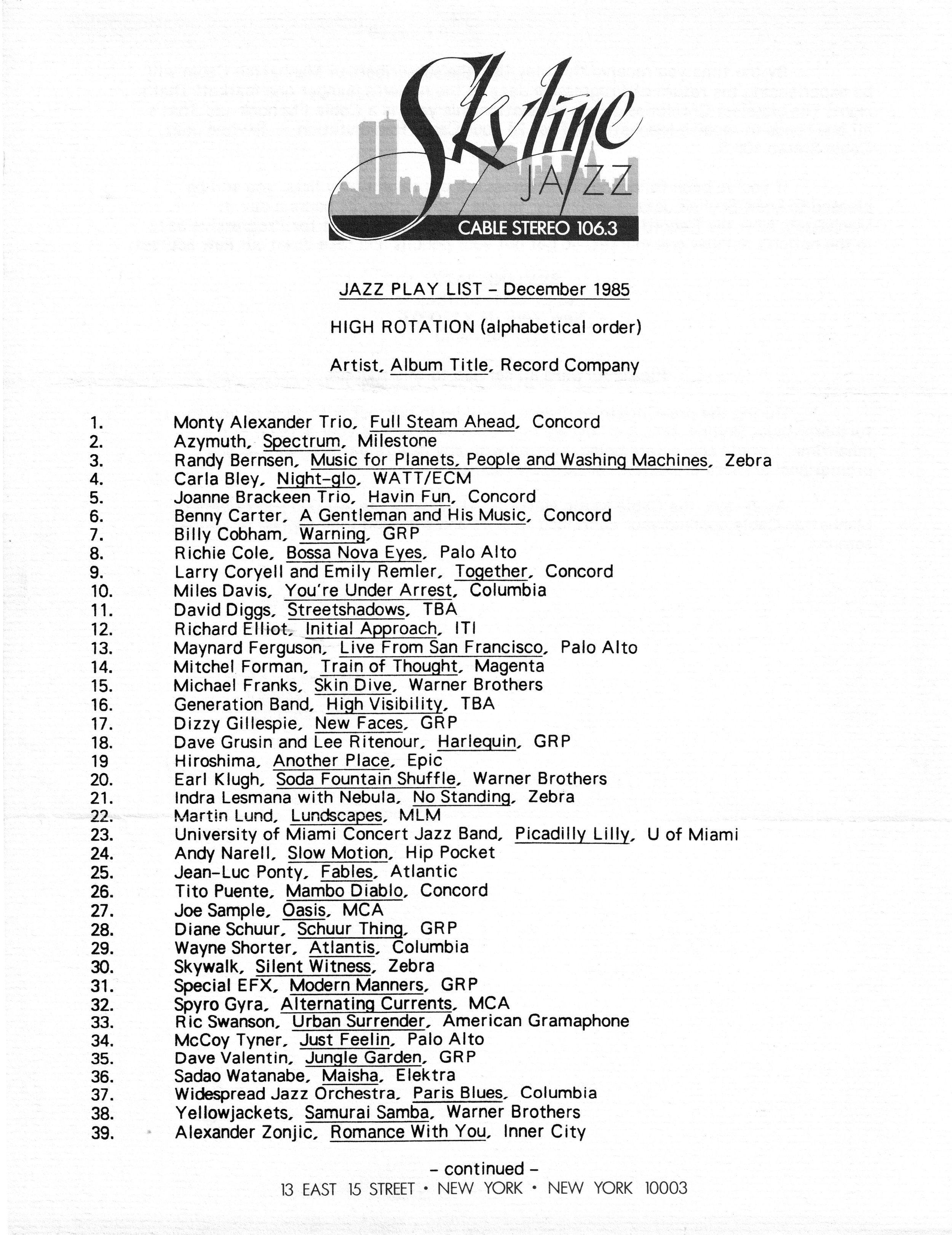
December 1985 Skyline Jazz playlist.
The station's first monthly playlist showing artists, albums and record labels used by Skyline Jazz programmers.
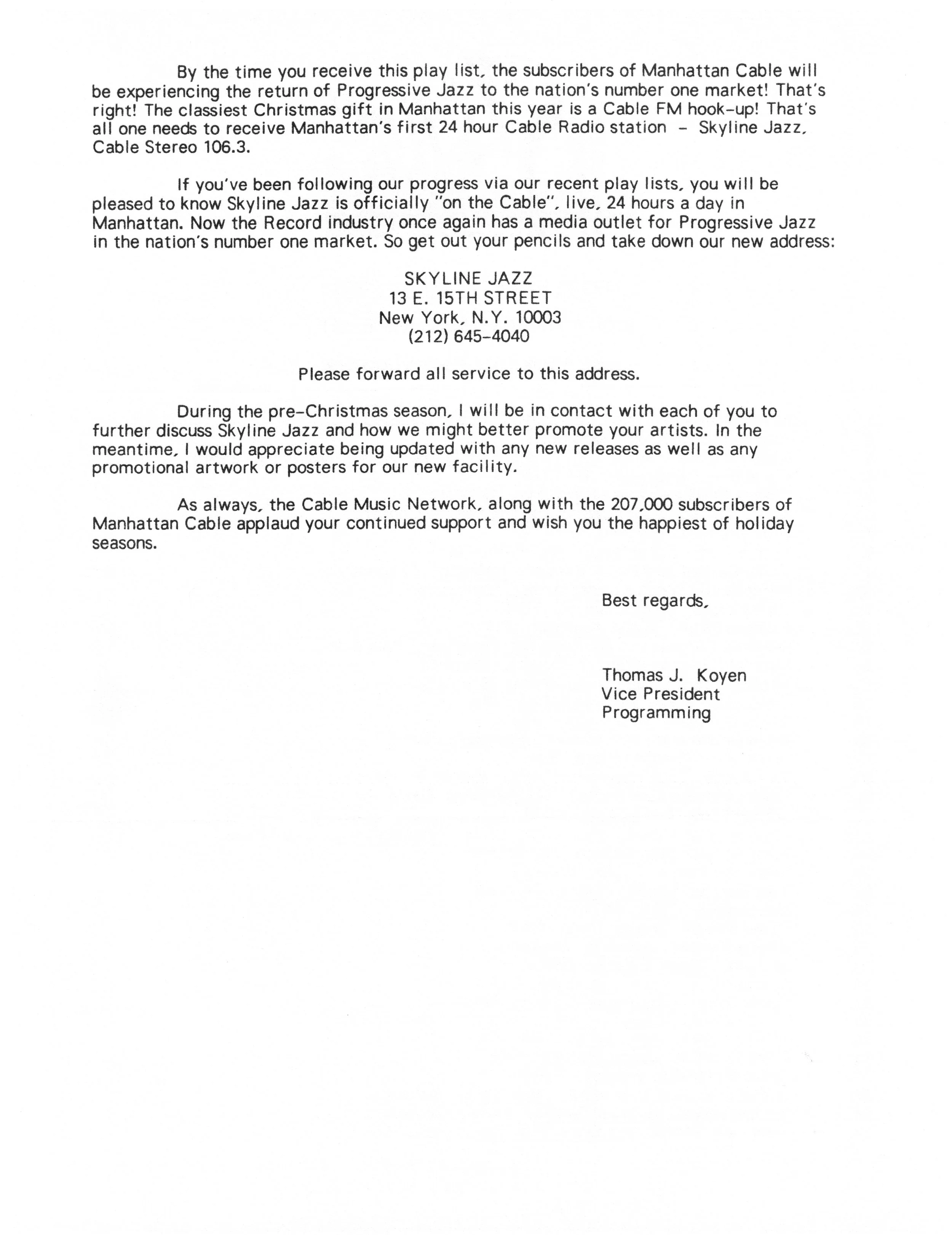
December 1985 letter to record labels.
Sent by Tom Koyen as page 2 of the December playlist announcing the launch of Skyline Jazz and introducing the station to the music industry.
The Skyline Jazz Sound
Although Skyline Jazz ceased broadcasting in 1991, its musical identity lives on through the recordings it championed. The official Skyline Jazz YouTube Music playlist, Skyline Jazz Cable Stereo 106.3 – NYC 1986 Favorites, includes more than 815 tracks spanning more than 75 hours of music from the artists and recordings that defined the Skyline Jazz Sound throughout its landmark 1986 season.
Experience the music that defined Skyline Jazz
Note: Because music streaming licenses change over time, some recordings may become temporarily unavailable. The playlist is updated periodically to preserve the Skyline Jazz listening experience whenever suitable replacements exist.