The Official Historical Archive
The Story
Skyline Jazz was a contemporary jazz cable radio station that served New York City from 1985 through 1991. Created by music enthusiasts Drew Butkocy, Tom Koyen, and Robert Silva, the station became a unique voice in New York's jazz community and introduced listeners to artists, recordings, and performances that were often overlooked by commercial radio.
Skyline Jazz didn’t just play tunes; it created a unique NYC focused cultural sound. For those who heard it, Skyline Jazz was not just a radio station; it was a moment that never quite happened the same way again.
Always About the Music
In November 1985, a contemporary jazz cable radio station quietly launched in Manhattan. Most New Yorkers never knew it existed. Yet for those who discovered it, Skyline Jazz became something unforgettable.
Skyline Jazz, Cable Stereo 106.3, was created by three music enthusiasts—Drew Butkocy, Tom Koyen, and Robert Silva—who shared a simple belief: great contemporary jazz deserved a home on New York radio. At a time when jazz was disappearing from commercial stations, they set out to build the station they wished existed.
A Dream Before Its Time
The journey began years before Skyline Jazz signed on.
In 1979, Drew and Tom explored launching a traditional FM station but quickly discovered that available frequencies were either impractical or unavailable. When WRVR-FM, New York's premier contemporary jazz station, abruptly switched formats, it confirmed their fears that contemporary jazz was losing its place on the dial.
Rather than give up, they looked for another path.
That path appeared through the emerging cable television industry. Cable systems carried FM audio channels that subscribers could hear through their home stereo systems. What began as an alternative became an opportunity.
Skyline Jazz Comes to Manhattan
After several experiments and setbacks, Manhattan Cable agreed to provide a channel in exchange for programming. Drew and Tom secured a small studio at 13 East 15th Street near Union Square and began building what would become Skyline Jazz.
The station needed a name that reflected both New York City and the music they loved.
The answer was Skyline Jazz.
Because 106.7 FM—the former home of WRVR—was unavailable, they chose 106.3 and adopted the identity that listeners would come to know: Skyline Jazz, Cable Stereo 106.3.
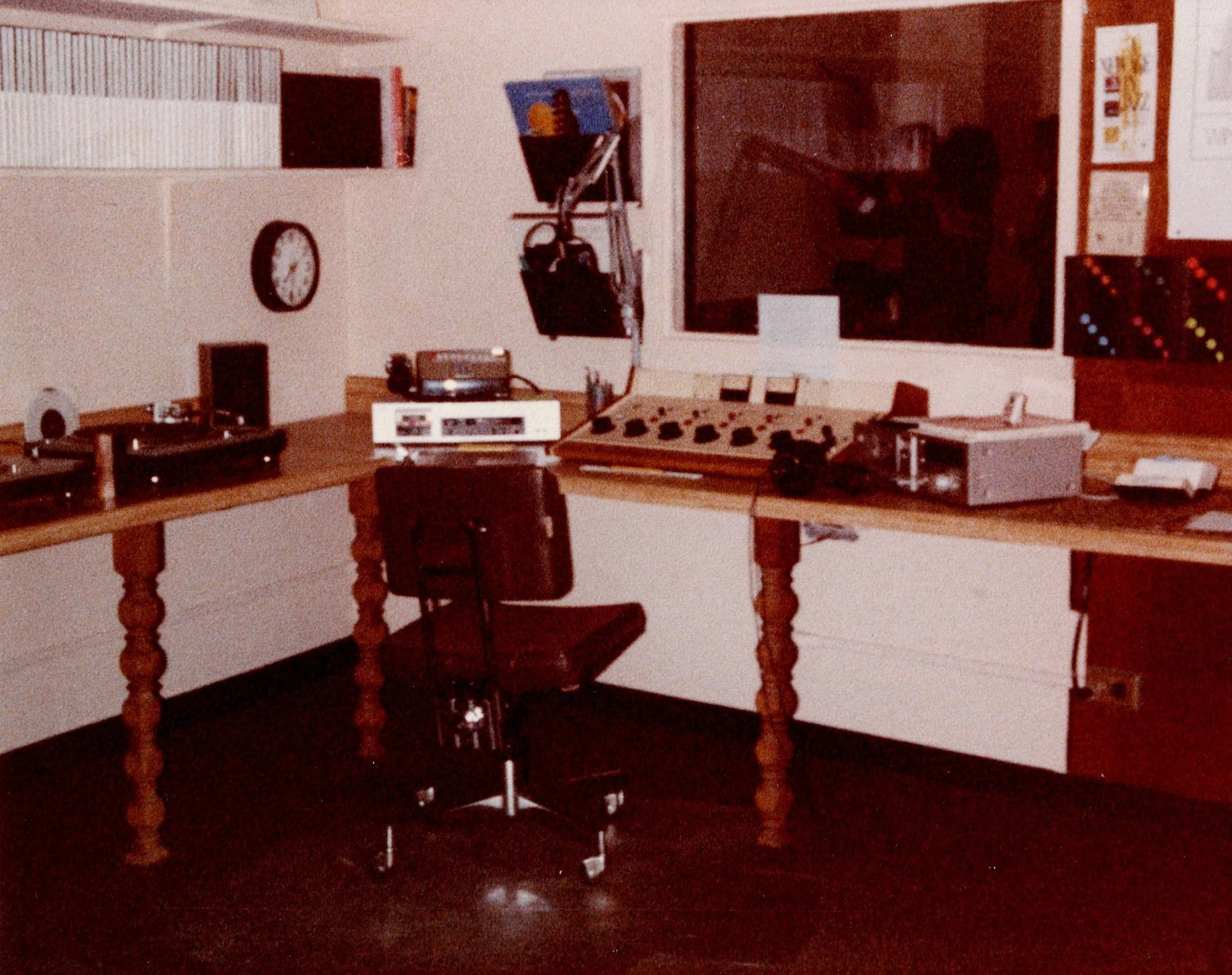
The Skyline Jazz studio November 1985
November 25, 1985
After weeks of building the studio, installing equipment, and recruiting volunteer air personalities, launch day finally arrived.
On November 25, 1985, Drew activated the audio feed to Manhattan Cable, sat at the console, and introduced Skyline Jazz to New York City. The first song played was George Benson's "No One Emotion."
Skyline Jazz was on the air.
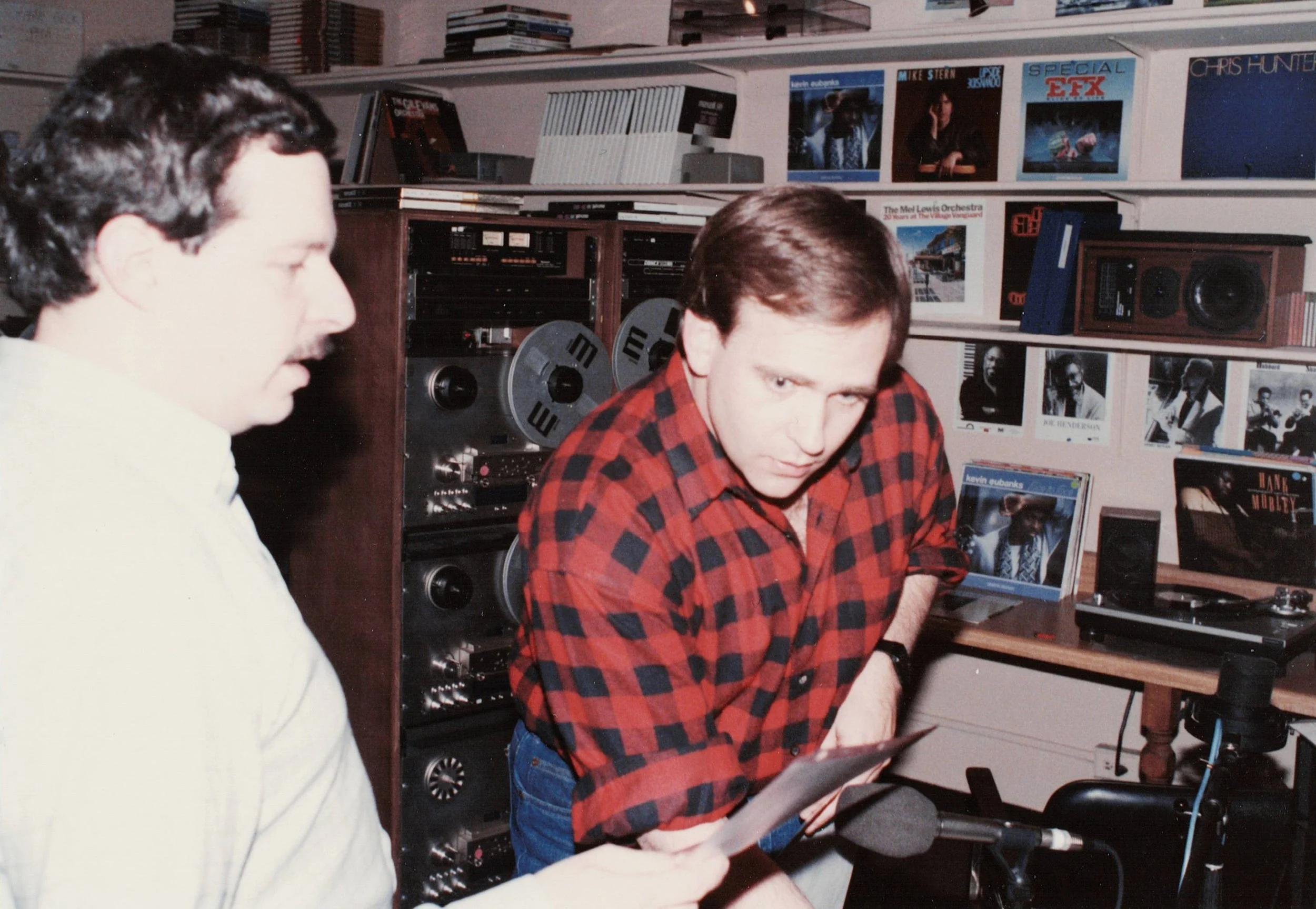
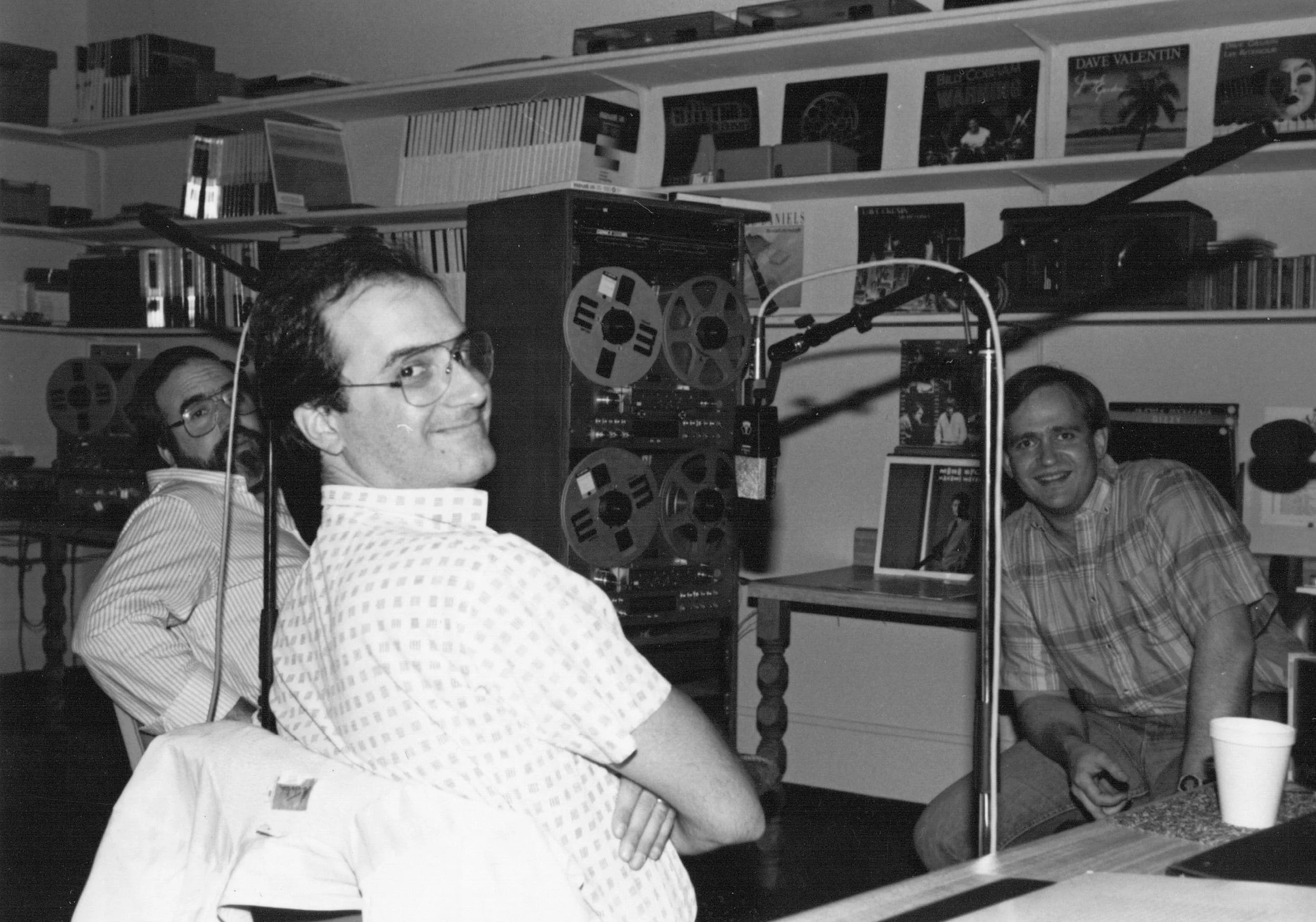
Drew and Tom working in the studio in 1986
More Than a Radio Station
Skyline Jazz quickly became more than a music service.
The station featured new releases, artist interviews, club information, concert promotion, and coverage of New York City's thriving jazz scene. The focus was never ratings or formulas. Programming decisions were made by listening, intuition, and a genuine love of the music.
Listeners heard a carefully curated blend of contemporary jazz, fusion, Latin jazz, and instrumental music that reflected the energy of New York during the mid-1980s.
For many, Skyline Jazz felt less like radio and more like a conversation among friends who shared a passion for jazz
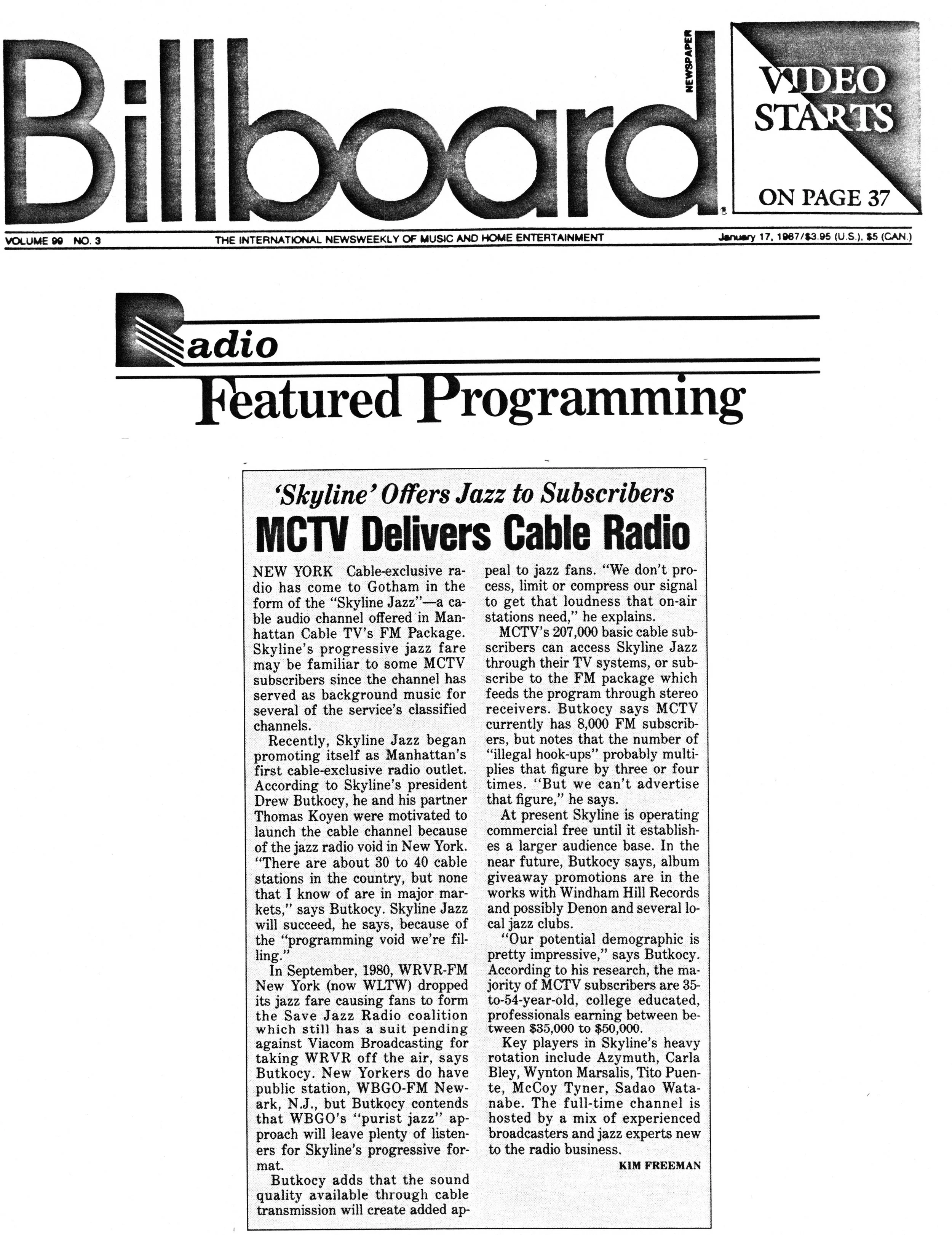
Billboard Magazine article on Skyline Jazz that originally appeared in the February 22, 1986 edition.
The Golden Year
By 1986, Skyline Jazz had become deeply connected to New York's jazz community.
The station conducted interviews with artists including Dizzy Gillespie, Randy Brecker, Michael Brecker, Larry Carlton, Joe Sample, Billy Cobham, Kevin Eubanks, Dave Valentin, and many others. Artists regularly visited the studio, recorded station identifications, and helped Skyline Jazz become a trusted voice within the jazz community.
The station also promoted concerts, supported benefit events, worked closely with record labels, and maintained relationships with clubs throughout Manhattan. Skyline Jazz wasn't simply reporting on the scene—it was part of it.
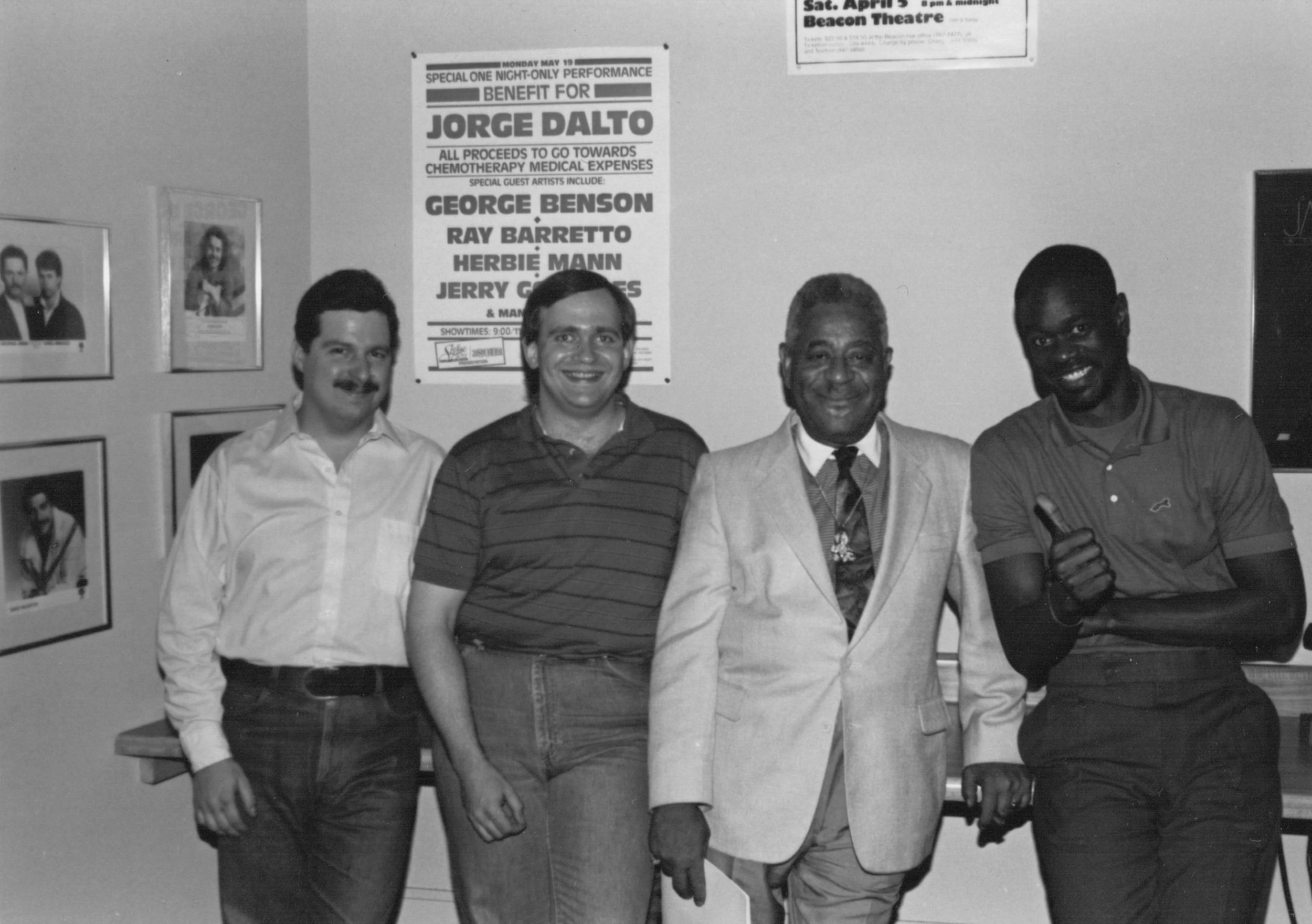
Drew, Tom, Dizzy Gillespie and volunteer DJ Nigel Kendall in 1986
A Loyal Audience
Although audience measurement was difficult in the cable-radio world, Skyline Jazz developed a passionate following.
Listeners discovered the station at home, at work, and even through television audio channels carrying the feed. Record stores featured Skyline Jazz playlists, jazz clubs promoted the station, and artists frequently expressed their appreciation for what Skyline Jazz was accomplishing.
By the end of 1986, Skyline Jazz had become a respected part of New York's contemporary jazz community.
The Final Years
Financial realities eventually became difficult to overcome.
Tom left the operation in 1987 to focus on his professional career, while Drew and Robert continued operating the station. Studio relocations, rising costs, and the challenge of generating advertising revenue led Skyline Jazz to transition from live programming to an automated format airing preproduced shows.
Despite these challenges, the music continued. For nearly three more years Skyline Jazz remained on the air, serving listeners throughout New York City and beyond.
On April 1, 1991, the phone lines delivering Skyline Jazz’s signal to Manhattan Cable’s head end were disconnected. Skyline Jazz had completed its final broadcast.
Tom interviewing Randy and Michael Brecker in 1986
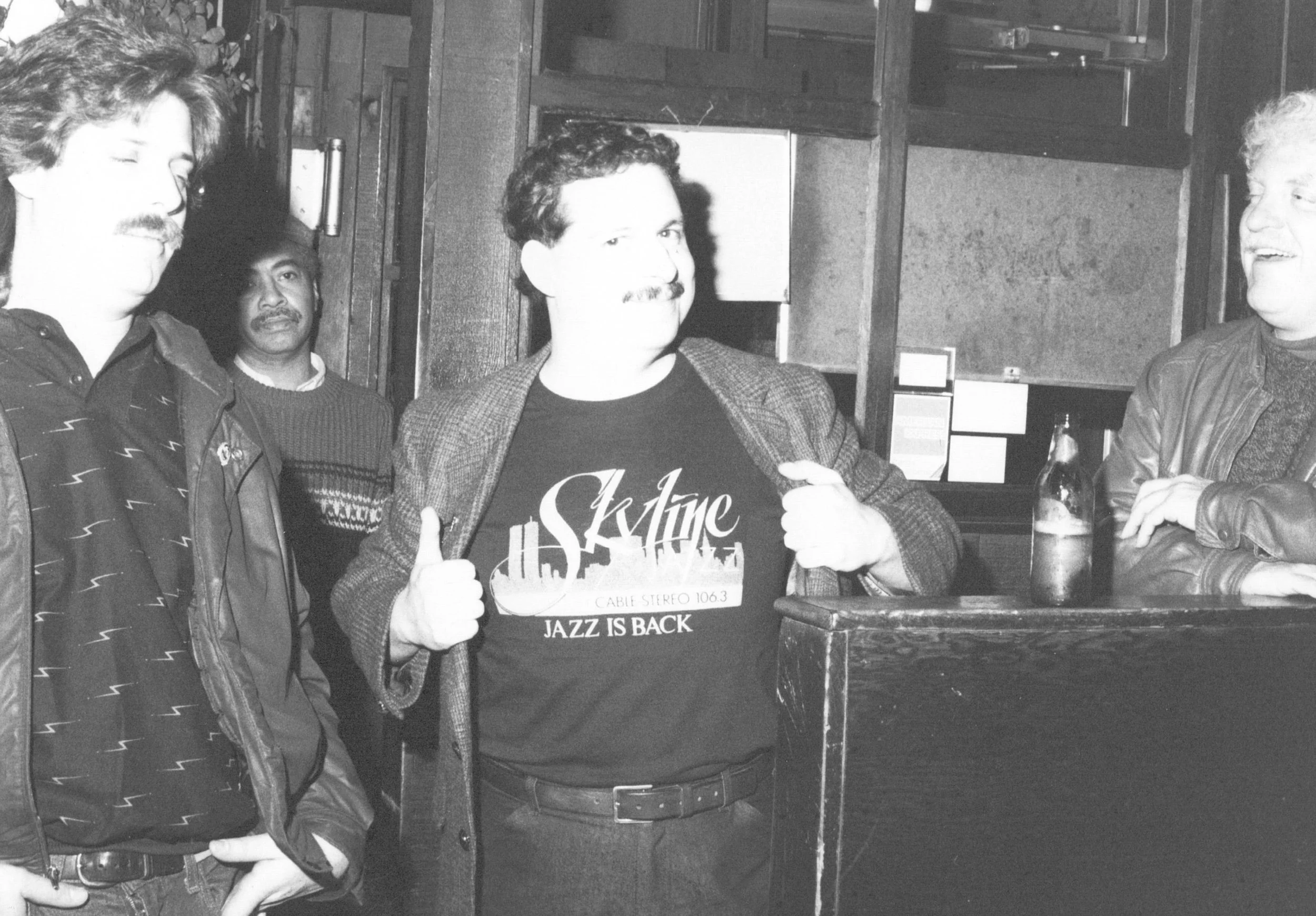
Drew at Skyline Jazz 2nd anniversary celebration at Mikell’s Jazz Club in 1987
The Legacy Lives On
Skyline Jazz existed during a unique moment in New York radio history.
Long before streaming services, playlists, and recommendation algorithms, Skyline Jazz introduced listeners to new music through human judgment, personal passion, and a commitment to quality.
For those who listened, Skyline Jazz was never simply a radio station.
It was a community.
Today, this archive preserves surviving broadcasts, photographs, documents, playlists, interviews, and memories from Skyline Jazz's remarkable five and a half-year journey.
Nearly forty years later, it is still all about the music.
"For many listeners, Skyline Jazz felt less like radio and more like a musical hug."
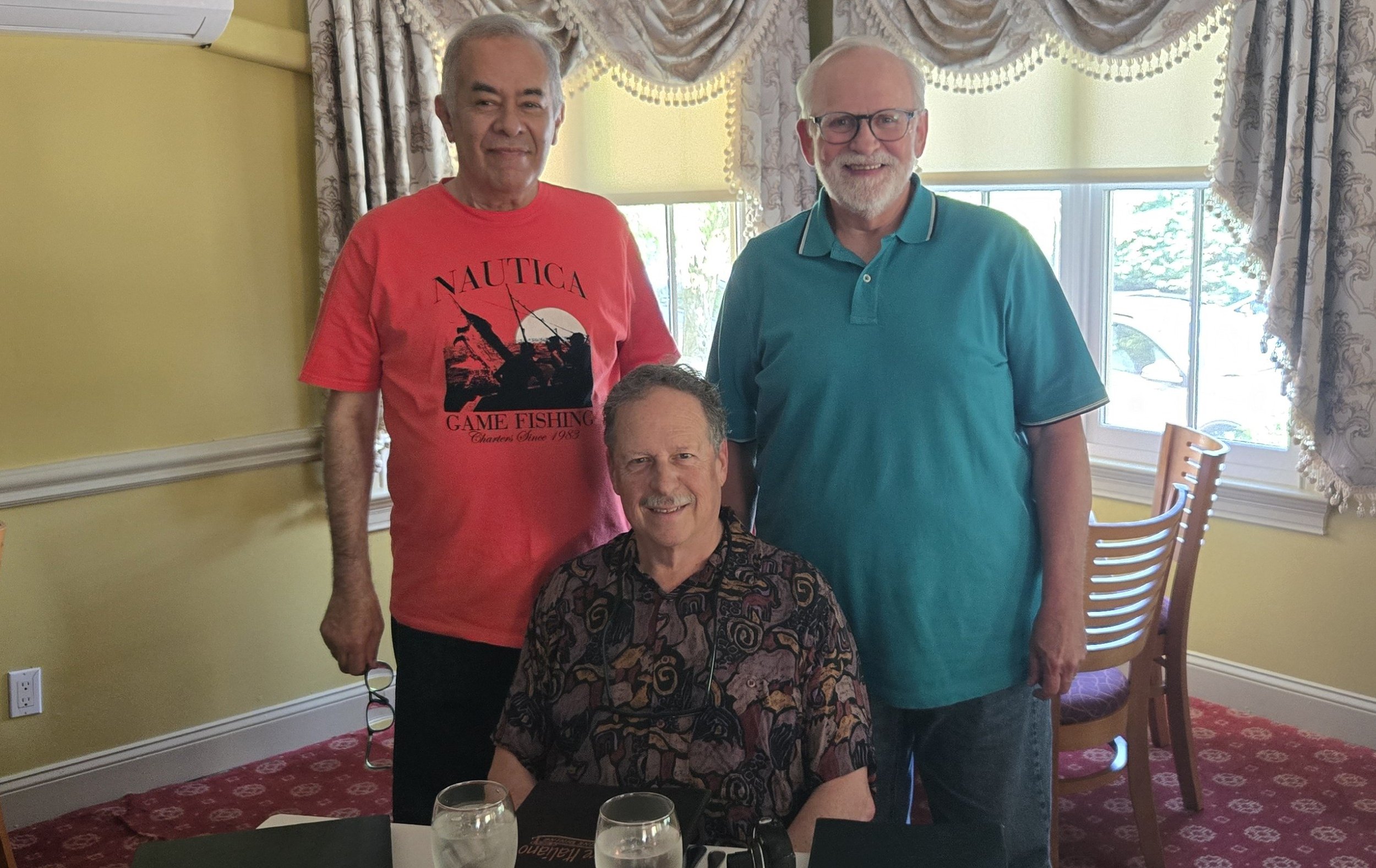
Robert, Drew and Tom in May 2026